Record Sentence Gives Hope to Teen Survivor
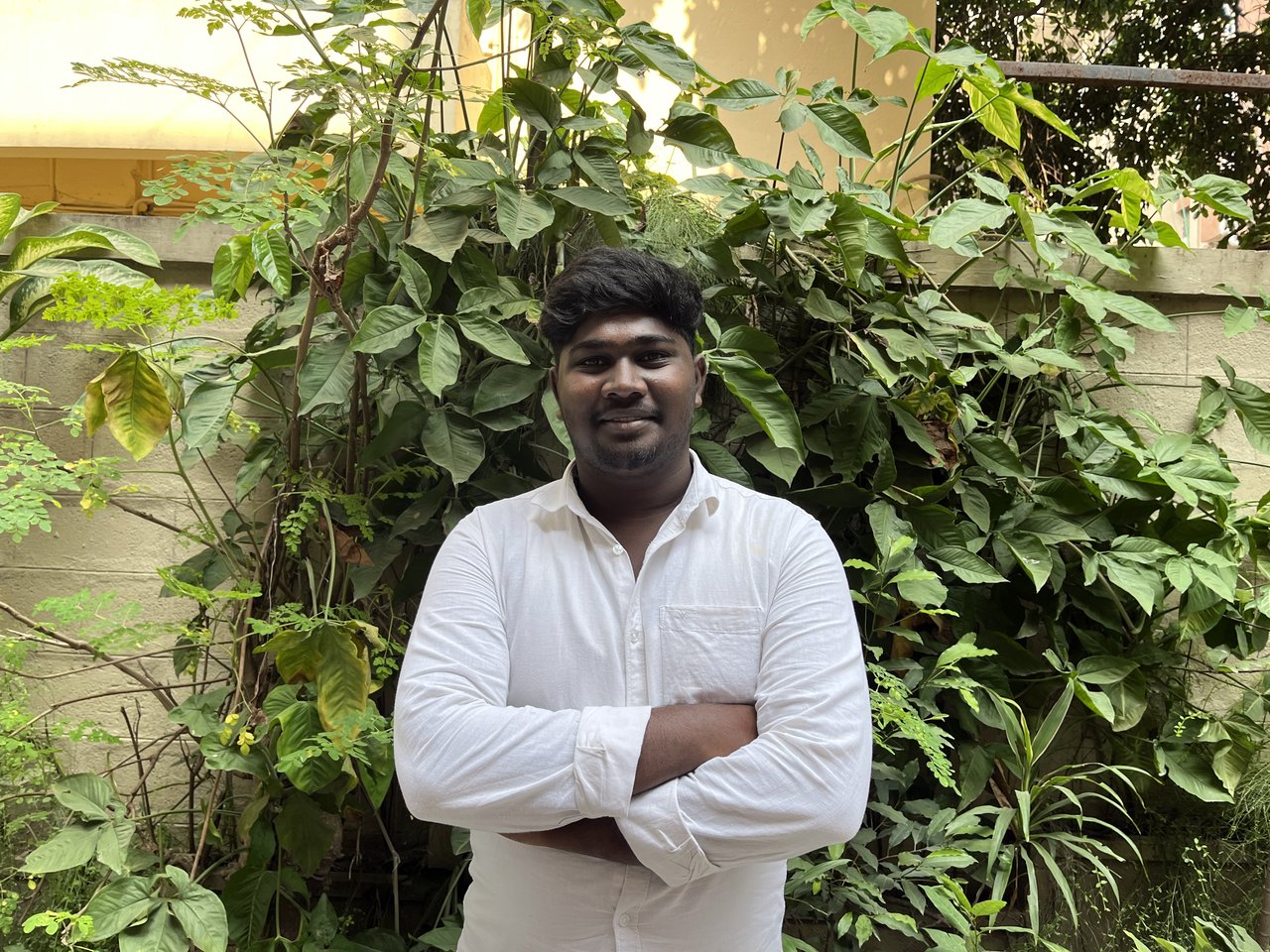
19-year-old Kabilan was at college when he received the news that the men who trafficked him as a child to a confectionery factory were sentenced to 16 years in prison – the longest bonded labour conviction India has ever seen.
The quiet teen walked into government offices after receiving the news, with a newfound confidence, shaking hands with senior officials who looked at him with pride. In disbelief and wonder, he said, “All these people worked for my case?”
This is his story of freedom.
Kabilan was only in sixth grade when a man lured him with promises of money. He was trafficked to Bangalore, approximately 443 km from home. At first, Kabilan was forced to work as a pickpocket. Kabilan was later sold into forced labour at a confectionery factory.
He was the only child forced to work at this factory. Kabilan would work from 6 am to 11 pm alongside the adult workers, organising ingredients, packing snacks, loading boxes, and performing other heavy tasks – all under constant verbal threats from the owner if he did not work fast enough.
Kabilan shared, “There were many days I was desperate to escape, but this new place—not native to me—made me fear being kidnapped by someone else. I gave up on wanting to escape and accepted what had happened to me. I was in shock for a long time.”
Meanwhile, at home, Kabilan’s parents searched every relative’s house and possible location in their area for three days. They filed a missing person report at the police station and put up notices across multiple nearby towns – but Kabilan was nowhere to be found.
When the case failed to gain police traction, IJM and local partners helped the parents file a habeas corpus petition (a court order that demands a person who has detained another individual to bring that person before a court. In this case, it moves police to take action on a missing person.
On New Year’s Day 2018, local authorities successfully traced and brought Kabilan to freedom from the confectionery unit.
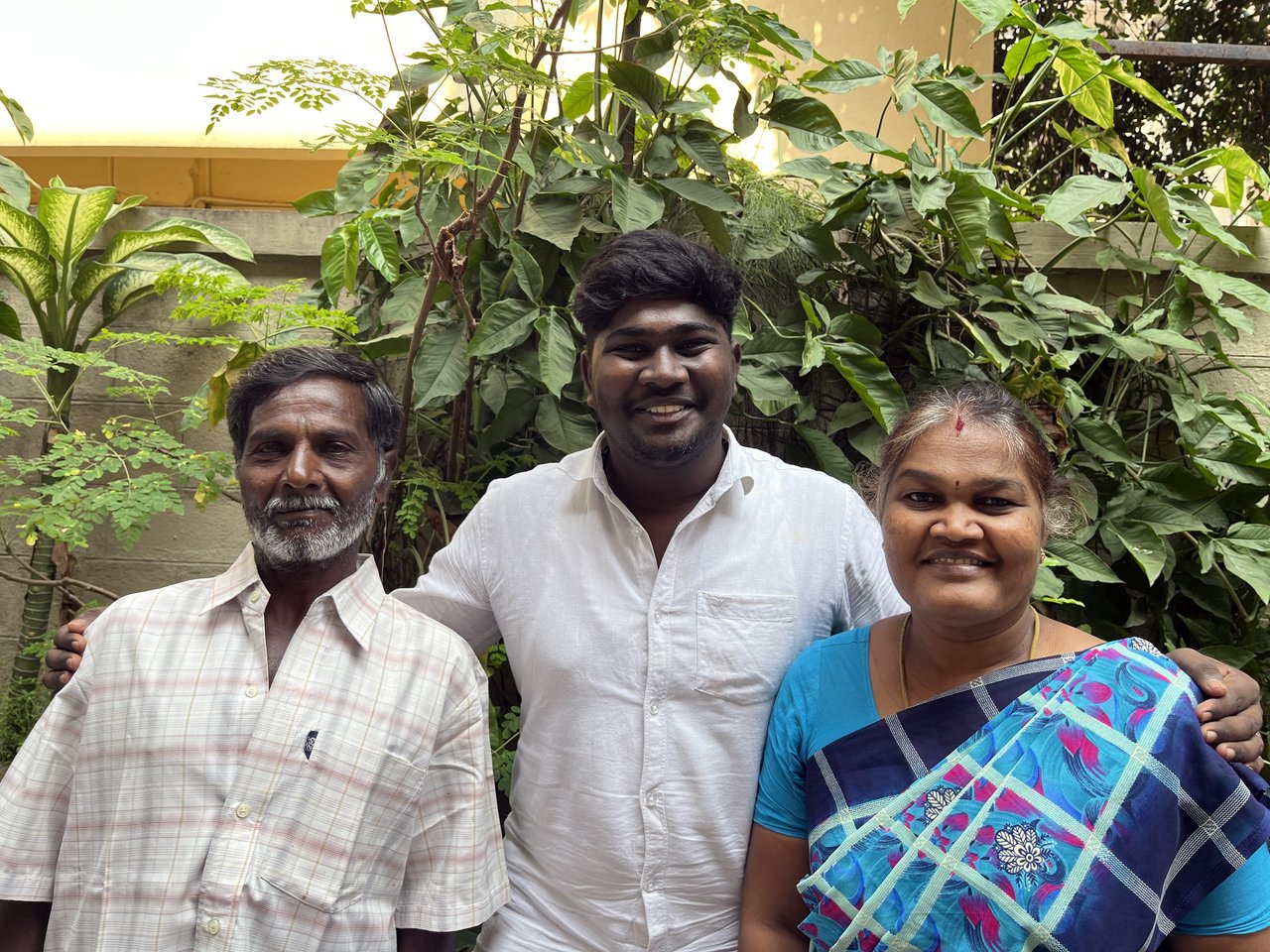
Poonkodi, Kabilan’s mother, told IJM, “We had spent many days, even nights, on the road searching for our son. For a year were in deep pain, concerned about his well-being. But one day, the police asked us to come meet them. We thought it was just another day of inquiry. As we were longingly waiting to meet the officials—burdened with expectation and fear—one official welcomed us into the room with a smile. That smile! I knew my son was back! I still remember that moment of relief. The long battle to be reunited with our son had come to an end!”
After a detailed investigation, formal charges were filed against the man who trafficked Kabilan and the owner of the factory where he was exploited. Survivor leaders also raised their voices to advocate and ensure justice was served.
47 witnesses took the stand throughout the trial, convincing the court to convict the accused, seven years after Kabilan was brought to freedom. They were sentenced to 16 and 10 years respectively – marking the strongest-ever conviction for bonded labour in India.
“It is a testament to the perseverance, partnership, and the unwavering resolve of every stakeholder who refused to give up on one child’s right to justice… It took eight long years from trafficking to conviction, but today, the criminal justice system has spoken with clarity and courage. The court has delivered a strong sentence, sending an unmistakable message to perpetrators: you cannot take the law for granted,” shared an IJM staff member.
After being brought to freedom, Kabilan returned home to his family and received ongoing support from a local IJM partner and the state Labor Department to continue his schooling. He received a Release Certificate, which formally identifies him as a survivor of bonded labour and entitles him to long-term benefits under the law. The local DLSA also supported him with psychosocial care and legal support throughout his trial.
However, for many survivors, healing is not linear. Kabilan reflected on how “The trauma was so deep that I didn’t know how to react even when I met my parents...I felt numb and scared for a while.”
“My son is strong,” his mother counters. “He has endured many criticisms even after rescue. For a long time, many people in our village—even his classmates—perceived him as a runaway and not as a survivor of bonded labour trafficking. Yet he endured it all. He stayed in school and graduated with a decent score.”
Today, Kabilan is in his second year of college. He says, “I want to become like the officials who rescued me!”
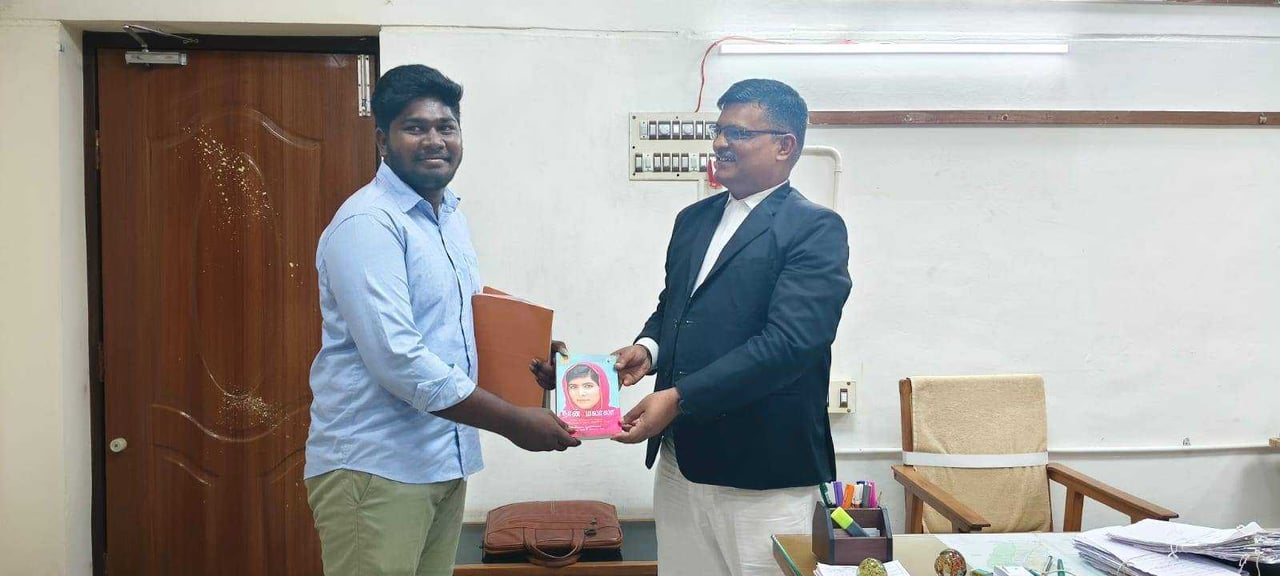
He recently met with the Principal District Judge of Theni, who encouraged Kabilan to get into the legal profession and gifted him a biography of Malala Yousafzai, saying, “You remind me of her—someone who has risen strong after facing immense struggle. All the best in your future. If you ever need help, please reach out to us.”
One of IJM’s staff shared, “The beauty of Kabilan’s case is not just that justice was delivered—it is how justice was delivered. Every arm of the state—from the police on the ground to the judiciary, the Crime Branch Criminal Investigation Department, labour officials, district administrators, and legal aid structures—presented an ideal example of how a coordinated, survivor-centric system can look.”
Your support makes stories like this possible – because of you, survivors like Kabilan are free, safe, and able to dream again.